
Why You Should Hire a Professional Web Developer
Your website isn't just a digital brochure anymore. It's where first impressions form, where trust gets built or broken, and increasingly, where revenue gets made or lost.
Here's how fast that happens: users form their initial opinion about a website in just 0.05 seconds. Before they've read a word, before they've seen your product, they've already decided whether you look credible. 75% of people judge a website's credibility based on its design, and 48% consider it the top factor in evaluating a business's trustworthiness.
That's not a design preference. That's a business risk.
The US web design services industry reached $43.5 billion in revenue in 2024, with the global market projected to expand to $92.06 billion by 2030. Businesses aren't pouring money into professional web development services because it's fashionable. They're doing it because the ROI on a well‑built, properly optimized website is measurable and significant.This article makes the case for hiring a professional web developer, with data, not guesswork.
The Real Cost of Getting Your Website Wrong
Before covering the benefits, it's worth being direct about the downside of skipping professional help.
88% of web users are unlikely to return after a poor experience, and 89% of shoppers will switch to a competitor following a bad interaction. That's not recoverable through a social media campaign or an email nurture sequence. The damage is done before you know it happened.
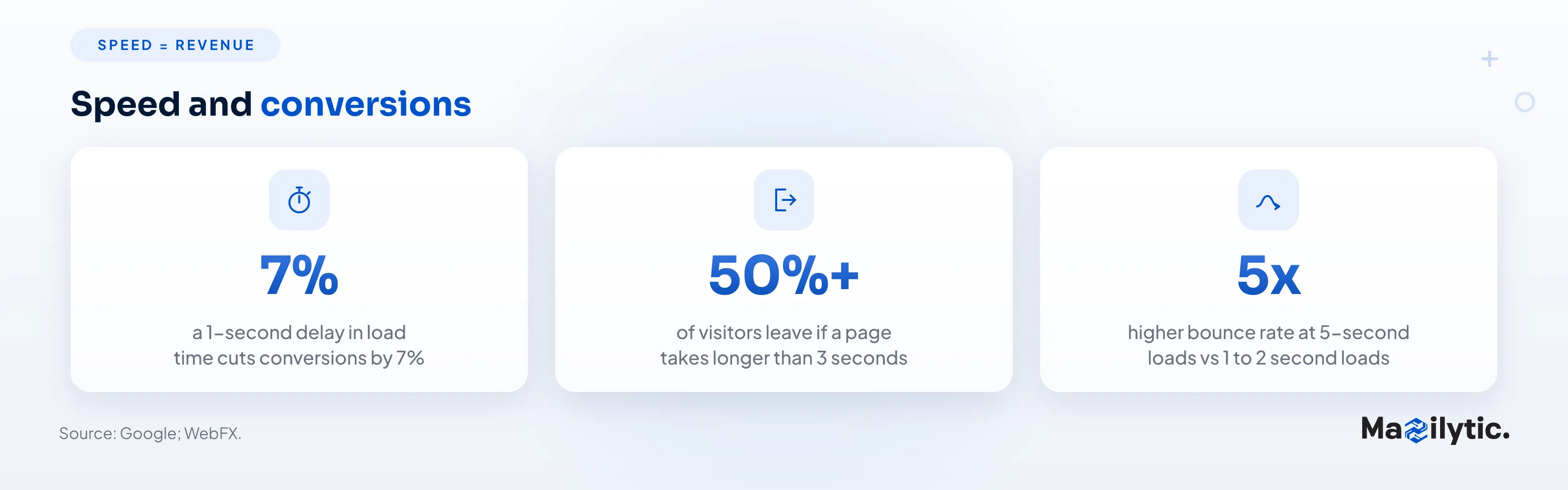
Websites that take over two seconds to load potentially lose 60% of their visitors. A one‑second delay in page load time leads to a 7% drop in conversions. For an online store generating $100,000 per day, that single second of delay translates to roughly $2.5 million in lost annual sales.
84% of mobile users faced hurdles when trying to complete tasks on a website via smartphone in 2025.
DIY builders and templates can't fix these problems. They're built to be generic. Your business isn't.
1. Custom Web Development Builds Competitive Advantage
There's a meaningful difference between a website that exists and one that works. Custom web development is what creates the latter.
Template‑based sites are built for the average business. They make compromises across design and performance so that they can serve thousands of different users at once. The moment your business has specific requirements - a unique onboarding flow, a complex product catalog, custom pricing logic, specific CRM integrations - a template reaches its ceiling.
Benefits that only custom web development delivers:
- Unique design that reflects your actual brand: 73% of companies invest in web design specifically to create unique, engaging brands. A professional website design custom‑built around your brand identity does something a template can't: it makes you recognizable and memorable in a space where most competitors look the same.
- Scalability that doesn't fight your growth: A custom‑built website grows with your business. Adding new features, integrating third‑party tools, handling increased traffic. These are straightforward operations in a well‑architected custom build. In a rigid template framework, each of these becomes a workaround.
- Integration with your actual tech stack: Professional developers build seamless connections between your website and the systems your business already runs, such as CRM, ERP, payment gateways, analytics, inventory management, and marketing automation. That integration is what turns a website from a marketing asset into an operational one.
- Custom website development for businesses: This isn't a luxury tier. For any business with specific operational needs or growth ambitions, it's the only approach that doesn't limit your ceiling.
2. Professional Website Design Converts, Templates Don't
A website that looks good gets attention. A website that's designed properly converts that attention into revenue.
Professional website design operates on principles that go far beyond aesthetics:
- Brand consistency across every element: Colors, typography, imagery, and tone all working together signal to a visitor that they're dealing with a real, organized business. Inconsistency, even subtle inconsistency, erodes trust before the visitor consciously registers why.
- Intuitive navigation that guides, not confuses: Users decide within seconds whether to stay or leave. A well‑structured information architecture and clear, logical navigation make the right path obvious. A cluttered or confusing layout does the opposite.
- Visual hierarchy that directs action: Where the eye goes, attention follows. Professional designers use layout, contrast, color, and spacing to guide visitors toward the things that matter: product pages, contact forms, demo requests, purchase buttons.
The conversion data is clear on what good design delivers: top‑performing sites in their industry consistently convert at 5x the rate of average performers, and the gap comes down to execution discipline, not novel tactics. Professional web design services for small businesses close that gap in a way templates structurally cannot.
3. Website Functionality Is a Revenue Decision
Performance and functionality aren't technical considerations separate from the business. They're direct drivers of whether visitors convert or leave.
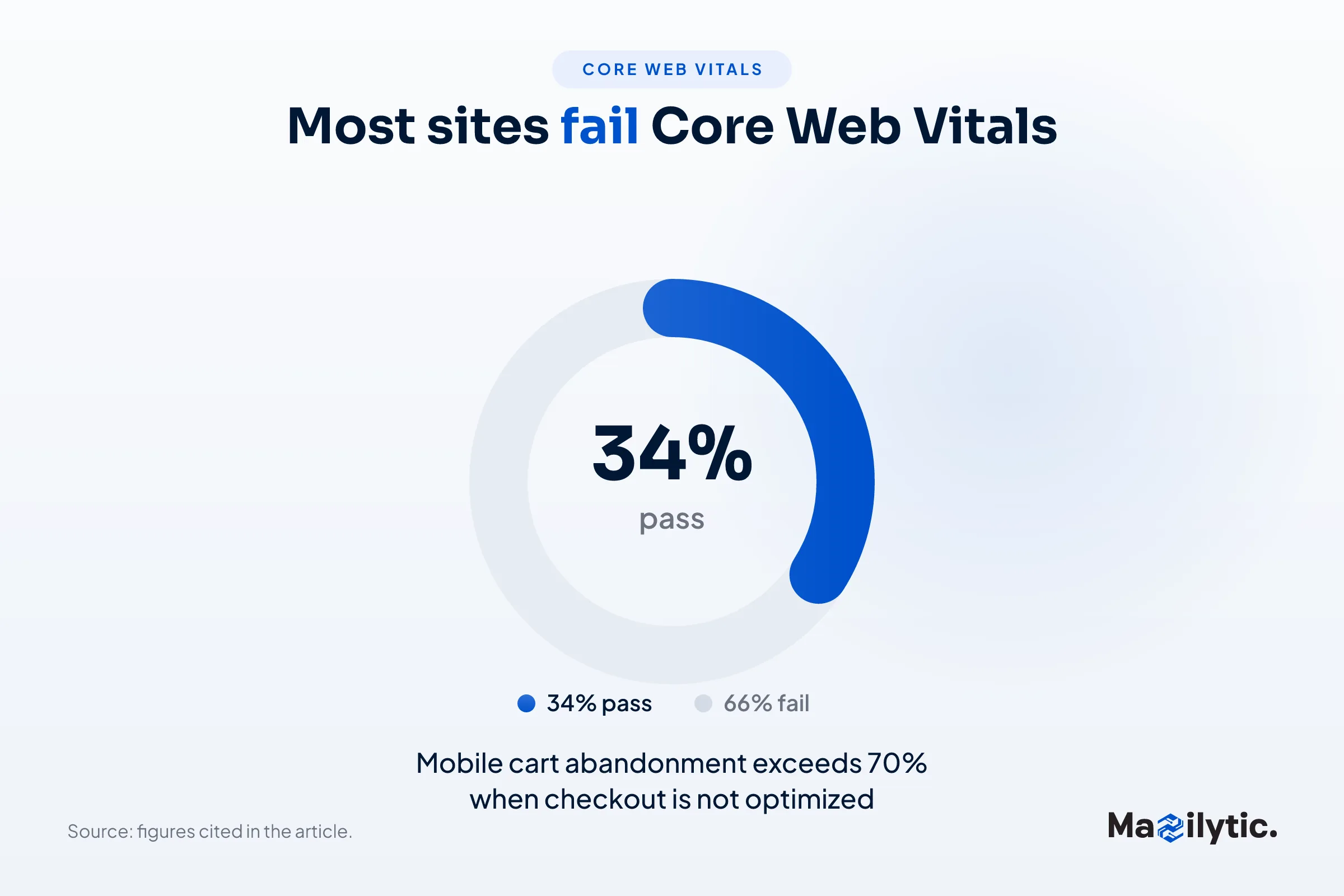
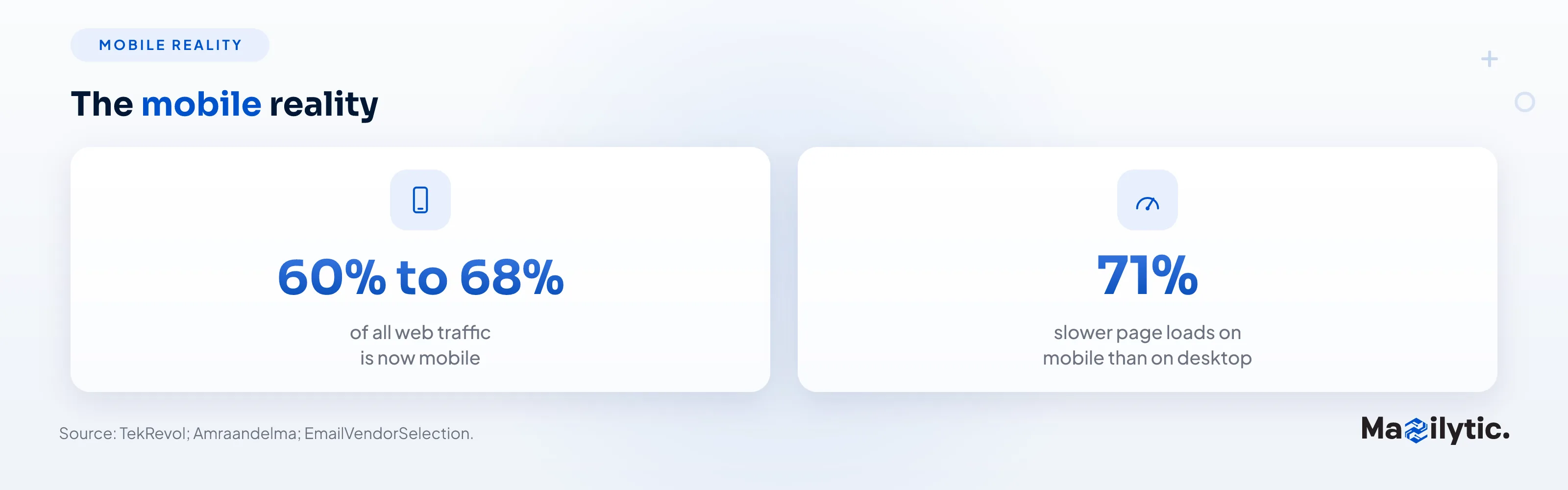
Over 62% of global traffic now comes from mobile, and each second shaved off load time can lift conversions by 2% or more, while delays over four seconds drive abandonment. A professional developer optimizes for this from the architecture level by choosing the right hosting infrastructure, implementing caching properly, optimizing asset delivery, and hitting Core Web Vitals targets that directly affect search rankings.
What professional web development services deliver on functionality:
- Page load times optimized to meet Google's Core Web Vitals thresholds (LCP under 2.5s, INP under 200ms, CLS under 0.1)
- Mobile‑responsive layouts that perform across all devices and screen sizes
- Interactive features like forms, chatbots, calculators, and configurators are built to load fast and function reliably
- Ongoing performance monitoring so degradation is caught before it costs traffic or conversions
93% of web designers have incorporated AI tools into their design processes. Professional developers in 2026 use these tools to work faster and smarter: automating testing, catching performance regressions early, and delivering higher‑quality output in less time. That efficiency benefits the businesses they build for.
4. UX Web Design Is the Difference Between Visits and Customers
User experience (UX) is the discipline of designing websites around how people actually behave, not how you wish they'd behave.
Good UX web design is invisible to the visitor. Everything feels natural. They find what they need without friction, progress through the funnel without confusion, and complete the desired action without second‑guessing. Bad UX is very visible: rage clicks, form abandonment, exit without conversion.
What professional UX design delivers:
- Reduced bounce rates through clear page structure and fast content delivery
- Higher engagement from navigation that matches how users actually think about finding information
- Better conversions from checkout flows, forms, and CTAs that minimize friction at every step
- Positive brand perception that makes visitors more likely to return and refer
88% of online consumers stated they're less likely to revisit a site after a poor experience. Professional developers who understand UX don't just build a site that works; they build one that consistently earns return visits.
5. Mobile‑Friendly Websites Are Non‑Negotiable in 2026
Mobile commerce is on track to represent 63% of total eCommerce by 2029, and over 60% of businesses report higher sales after implementing mobile‑responsive website designs.
A mobile‑friendly website in 2026 doesn't mean a desktop site that scales down on smaller screens. It means a site designed mobile‑first, where the smallest screen gets the most thoughtful attention because that's where most of your visitors arrive.
Why mobile responsiveness determines your SEO and revenue:
73% of web designers say poor mobile responsiveness is one of the leading reasons visitors leave a website, and more than 53.8% of web developers identify the lack of cross‑device responsiveness as a primary trigger for website redesigns. That's expensive. Getting it right the first time with a professional developer who builds mobile‑first by default costs far less than a redesign forced by poor performance.
Google now weighs mobile Core Web Vitals more heavily than desktop in its ranking algorithm. A site that looks perfect on desktop but performs poorly on mobile is a site that ranks lower and converts less across the board. Responsive web design isn't optional; it's the baseline.
6. SEO‑Friendly Website Development Starts at the Code Level
SEO web development isn't something you add to a website after it's built. It's baked into the architecture, the page structure, the URL format, the image handling, and the load speed from the very first line of code.
A professional developer builds with SEO in mind from day one:
- Clean URL structures that signal content relevance to search engines
- Schema markup that gives Google structured context about your business, products, and content
- Optimized page speed; Google's Core Web Vitals directly influence rankings, and a developer who doesn't hit those thresholds is costing you organic traffic
- Proper heading hierarchy that makes content scannable for both users and search crawlers
- XML sitemaps and robots.txt configuration that ensure the right pages get indexed
The average page load speed for the top 10 Google search results is 1.65 seconds. That's not accidental. Those sites rank where they do partly because their technical foundation was built properly. SEO‑friendly website development is what gives that foundation its structure.
7. Ecommerce Web Development Requires Specialist Expertise
Building an online store isn't the same as building a website. The stakes are different. The security requirements are different. The conversion optimization demands are different.
Ecommerce web development at a professional level delivers:
- Secure payment infrastructure
PCI‑DSS compliance, SSL certification, and properly implemented payment gateways aren't optional, they're legal and operational requirements. A professional developer handles these correctly the first time.
- Checkout flows designed to convert
22% of shoppers abandon their purchase due to a long or complicated checkout process. A professional developer builds checkout experiences that reduce friction with guest checkout, autofill support, minimal steps, and clear error handling.
- Inventory and order management integration
Custom ecommerce solutions connect your storefront to your backend systems so inventory updates automatically, orders route correctly, and customer data stays accurate across every touchpoint.
The global average ecommerce conversion rate sits at 2.35% across industries in 2026, but top performers hit 5x that. The gap between average and excellent is almost entirely about how the site was built and what gets optimized after launch.
8. Ongoing Support Protects Your Investment
A website is not a one‑time project. It's infrastructure that requires consistent attention to stay secure, performant, and competitive.
What a professional web developer provides post‑launch:
- Security monitoring and updates: vulnerabilities in CMS platforms, plugins, and dependencies are discovered regularly. Professional maintenance applies patches before they're exploited.
- Performance monitoring: load times, Core Web Vitals scores, and uptime are tracked continuously, with issues caught before they reach users.
- Feature development: as your business grows, your website needs to grow with it. A developer who built it can extend it efficiently without creating technical debt.
- Analytics‑informed iteration: professional developers use real user data to identify where visitors drop off, where conversions stall, and what changes will move the metrics that matter.
14% of small businesses struggle with website maintenance due to a lack of time and knowledge (Hostinger, 2026)
That struggle compounds over time: security vulnerabilities accumulate, performance degrades, and the eventual cost of fixing a neglected site far exceeds what regular professional maintenance would have cost.
DIY vs. Professional Development: The Honest Comparison
DIY platforms and templates have their place. For a personal project, an early‑stage MVP, or a purely informational micro‑site with minimal requirements, they're often the right choice.
But they have hard limits. Template customization only goes so far. Plugin stacks create performance and security debt. You're constrained by what the platform allows, and what the platform allows isn't built for your specific business.
The hidden costs of DIY development compound fast:
- Time diverted from running the actual business
- Performance problems that cost organic rankings and conversions
- Security vulnerabilities that accumulate without professional oversight
- Eventual rebuild costs when the platform can no longer support your needs
The benefits of professional web development services become clearest when you measure them against these costs rather than just against the upfront price tag.
What to Look for When Hiring a Professional Web Developer
- Relevant portfolio work
Has this developer or agency built for businesses at your scale and in your sector? Impressive design is not the same as experience with your specific problem.
- Technical transparency
Can they explain their architectural decisions without retreating into jargon? A developer who can't explain why they're making a technical choice probably doesn't fully understand it.
- Documented process
Discovery, wireframing, staging, testing, launch, post‑launch monitoring: a professional website development company has a structured process for each phase. An agency that skips straight to mockups is skipping the work that makes the mockups right.
- Post‑launch support terms
What exactly does their maintenance contract cover? What are the response time SLAs? What's included versus billable? These questions separate serious partners from build‑and‑disappear vendors.
Conclusion
The question isn't whether to invest in a professional web developer. The question is whether you can afford the compounding cost of not doing it.
Professional website design that converts. Custom web development that scales. SEO‑friendly website development that earns organic traffic. Responsive web design that captures mobile commerce. These aren't separate investments but they're what a professionally built website delivers as a single, integrated result.
The businesses outperforming their competitors online in 2026 didn't get there by choosing the cheapest tool. They chose the right partner, built it properly, and kept investing after launch.
CTA: Ready to build a website that actually works for your business?
Mazilytic's web development services are built around your specific objectives. Not just a template that happens to have your logo on it. Get in touch to see what's possible.
Frequently Asked Questions
Q1. Why hire a professional web developer instead of using a website builder?
Website builders are designed to serve the average business across thousands of different use cases. A professional developer builds specifically for you, optimizing for your conversion goals, your technical requirements, and your growth trajectory in ways a template structurally can't.
Q2. What are the benefits of professional web development services for small businesses?
Professional web development services for small businesses deliver custom branding, mobile‑first responsiveness, SEO‑friendly architecture, and post‑launch support, a combination that turns a website from a cost into a revenue‑generating asset. The alternative is a template that looks like every other business on the same platform.
Q3. How does custom website development help with SEO?
Custom development allows for clean URL structures, proper schema markup, optimized page speed, correct heading hierarchy, and Core Web Vitals compliance from day one. These technical foundations have a direct and measurable impact on search rankings that template‑based sites typically can't match.
Q4. What should I look for in a professional web developer or website development company?
Relevant portfolio experience, technical transparency, a documented development process, and clear post‑launch support terms. A strong track record with businesses at your scale matters more than an impressive‑looking website of their own.
Q5. How much does professional website design cost?
A basic professional website typically runs $6,500 to $15,000. Redesigns range from $3,000 to $75,000 depending on complexity (Hostinger, 2026). Enterprise builds with full ecommerce, compliance, and custom integrations run higher. The more useful question is what the site will cost your business if it's built poorly - in lost conversions, organic traffic, and eventual rebuilds.