
How Website Performance Optimization Boosts SEO and User Engagement
Page load speed isn't a “nice to have” anymore. It's the foundation everything else on a website sits on. People expect information instantly, which is exactly why website performance optimization belongs at the center of every serious SEO optimization service. When a site loads quickly, it ranks better on search engines like Google. When it doesn't, visitors get frustrated, bounce rates climb, and buyers move on to a competitor.
Performance optimization is a complete cycle that touches the entire user experience (UX), meets Google search engine optimization best practices, and hits crucial benchmarks such as page load speed and Core Web Vitals. When these factors are managed properly by a capable web app development agency, businesses see real improvements in search exposure, conversion rates, and customer retention.
This article breaks down exactly how website performance optimization affects SEO and engagement, backed by primary data from Google, Pinterest's own engineering team, and documented industry case studies.
The Relationship Between Website Performance Optimization and Google SEO
Why Website Speed Matters for SEO
Page load speed has a direct effect on user experience, which is exactly why Google treats it as a genuine ranking signal within its broader Google search engine optimization algorithm. The pattern is consistent: when a website loads slowly, visitors leave before they even see the content, and that abandonment signals to Google's algorithm that the page isn't satisfying search intent, so it ranks lower.
Key factors affecting site speed SEO
• Lower crawl budget: search engines allocate a limited crawl budget per site. On a sluggish website, fewer pages get crawled and indexed.
• Reduced search rankings: Google's own developer documentation confirms this directly. Site owners should aim for content that loads within the first 2.5 seconds to deliver a good experience.
• Increased bounce rates: users abandon slow pages well before they finish loading, and that frustration compounds across a session.
Optimization tactics that consistently move the needle
• Leverage browser caching
• Minify HTML, CSS, and JavaScript
• Compress images without sacrificing visual quality
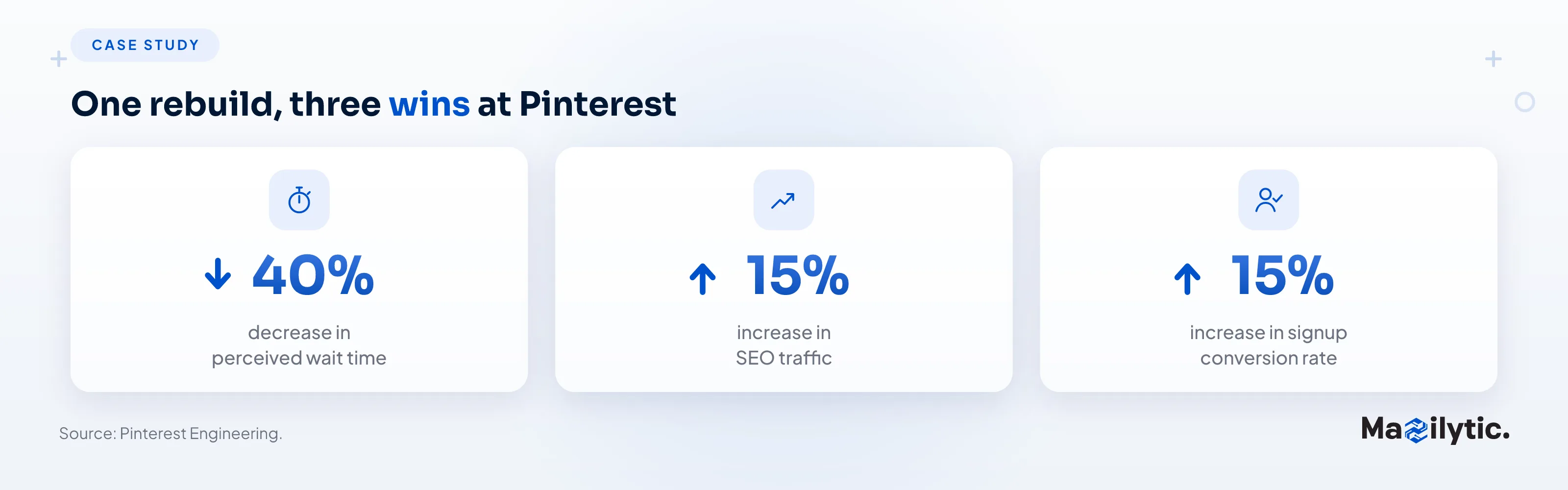
Real case study: Pinterest's own engineering blog offers genuine primary‑source data here, not a secondhand claim. After rebuilding its pages for performance, Pinterest reported a 40% decrease in perceived wait time, a 15% increase in SEO traffic, and a 15% increase in signup conversion rate. That's an engineering team publishing its own measured results, exactly the kind of evidence worth trusting when evaluating any SEO services provider's claims.
Core Web Vitals: Google's Performance Benchmark
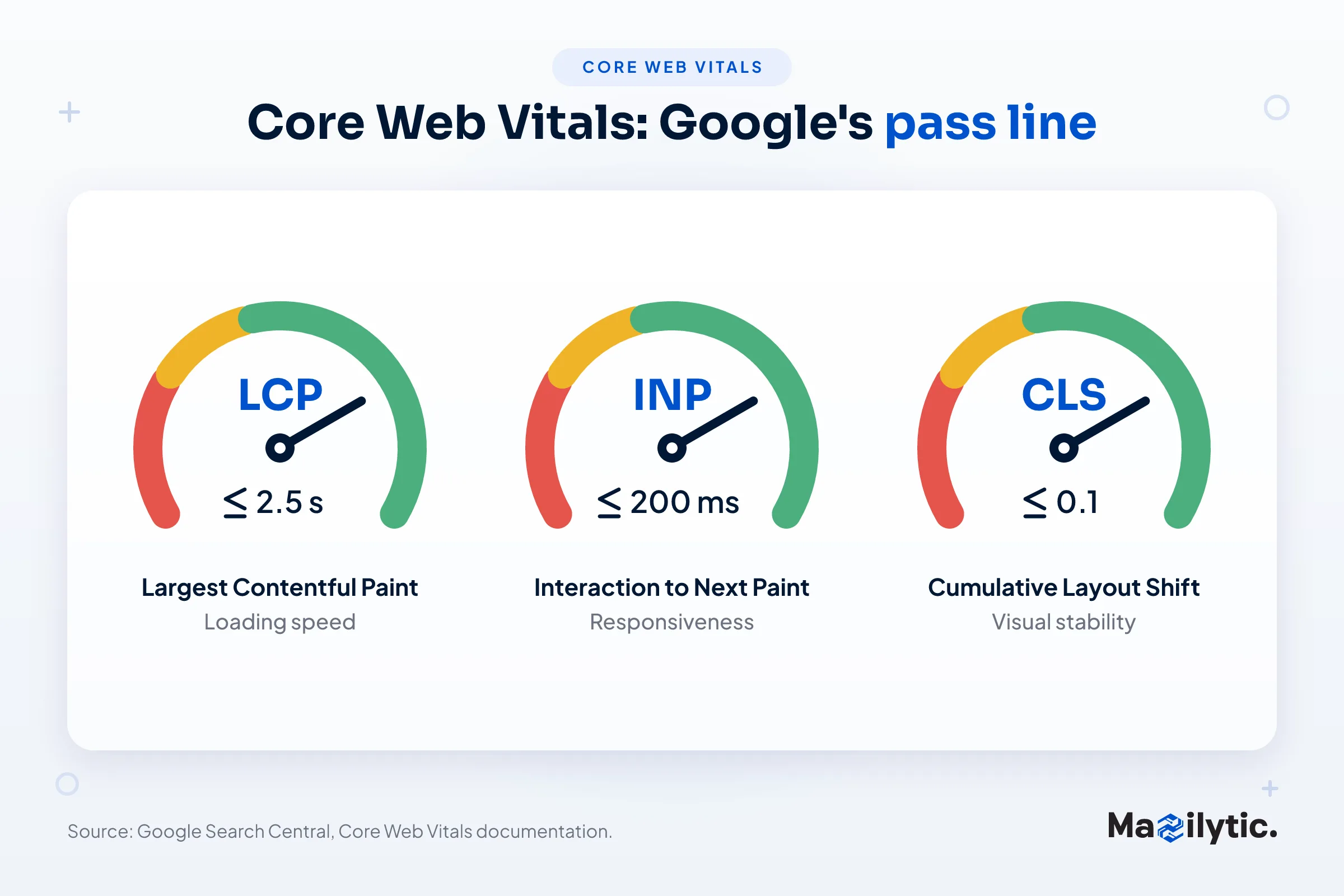
Google created Core Web Vitals as a standardized way to measure actual user experience, and they now sit at the center of how any serious SEO optimization service approaches technical audits. Three metrics matter most:
• Largest Contentful Paint (LCP): measures loading performance. Google's target is under 2.5 seconds.
• Interaction to Next Paint (INP): measures responsiveness. Google officially replaced the older First Input Delay (FID) metric with INP in March 2024, because INP captures every interaction across a page visit rather than just the first click. The target is under 200 milliseconds.
• Cumulative Layout Shift (CLS): measures visual stability. The target is below 0.1.
Why Core Web Vitals Are Non‑Negotiable
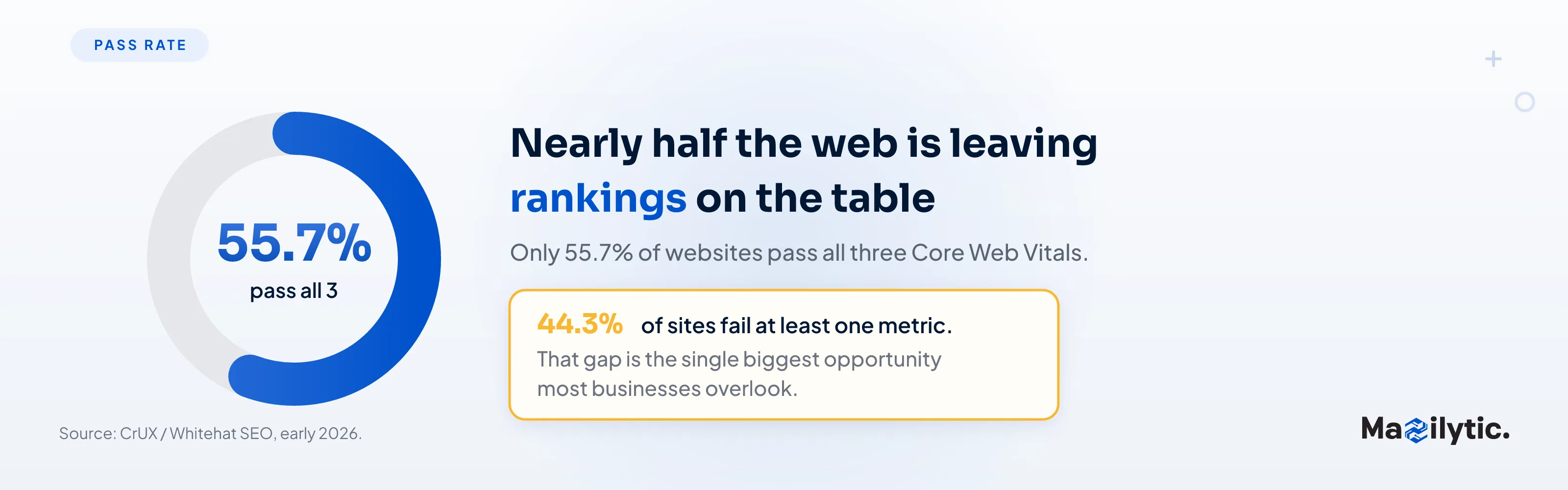
Sites that meet these standards consistently deliver a smoother browsing experience and tend to rank higher as a result. As of early 2026, global CrUX data shows that only 55.7% of websites pass all three Core Web Vitals thresholds. This means nearly half of the web is still leaving rankings and engagement on the table. That gap represents the single biggest opportunity most businesses overlook, and it's increasingly where AI SEO optimization tools are being deployed to flag issues automatically before they affect rankings.
Optimization tips
• Choose faster, properly configured hosting
• Implement lazy loading for images below the fold
• Improve server response time at the infrastructure level
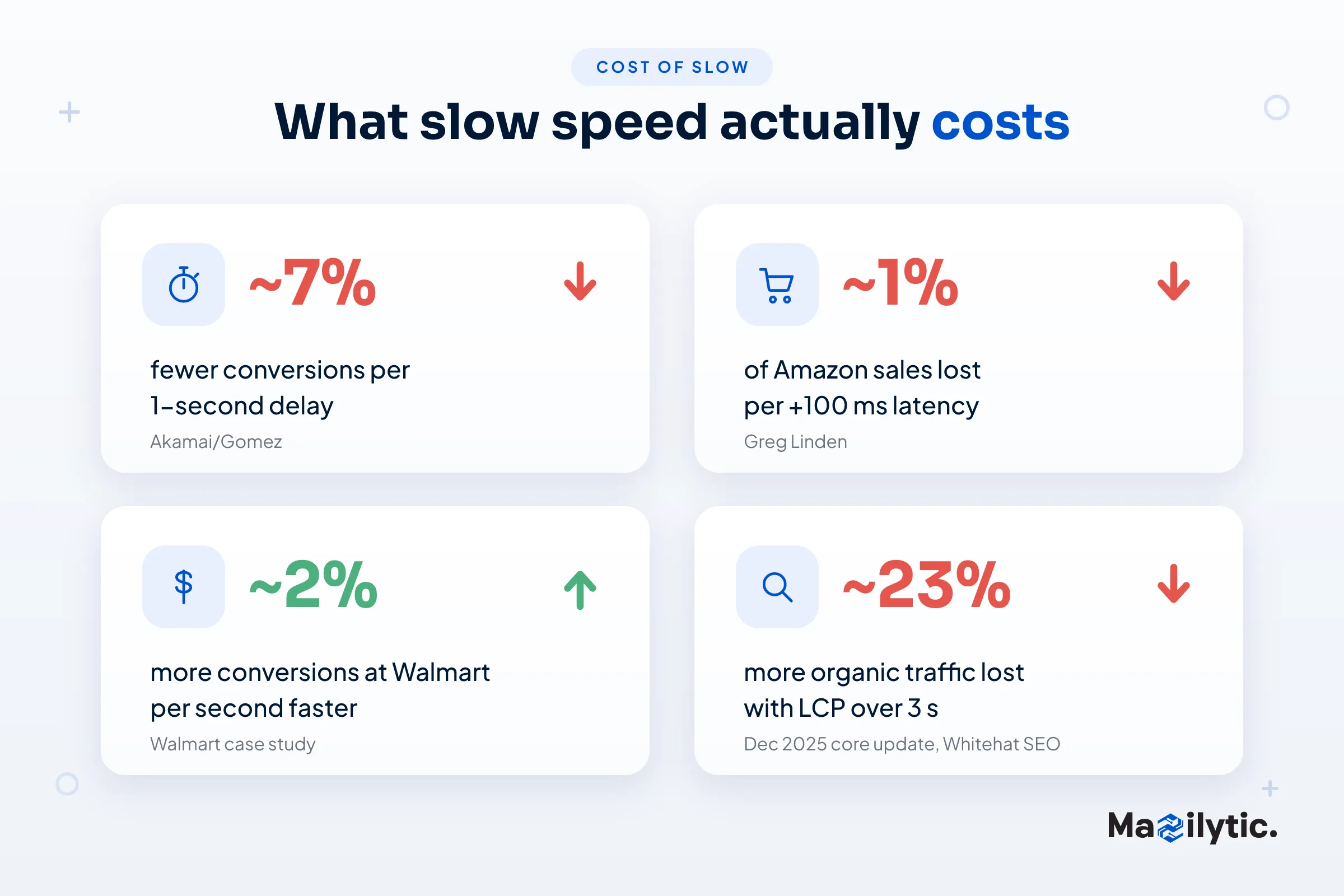
Real‑world impact: analysis of the December 2025 Google core update found that pages with an LCP above 3 seconds experienced roughly 23% more organic traffic loss than faster competing pages with comparable content. That figure is strong evidence that performance isn't cosmetic; it's a ranking lever that any capable SEO marketing company should be monitoring on behalf of its clients.
How Website Performance Optimization Improves User Engagement
Enhanced UX Retains Visitors
The faster and smoother a website behaves, the more pleasant it is to navigate, and that directly drives conversions. This is also where the choice to build a web app rather than rely on a bare content site starts to matter: interactive, app‑like experiences depend entirely on the underlying performance foundation being solid first. Responsive web design should be treated as a baseline requirement, not an afterthought.
Techniques for UX optimization
• Responsive design that performs smoothly across desktop, tablet, and mobile
• Simplified navigation, so users reach what they need in three clicks or fewer
• Interactive features like chatbots, clear CTAs, and fast‑loading forms that keep people engaged rather than frustrated
A one‑second delay in page load time can reduce conversions by roughly 7%, a figure that traces back to widely cited Akamai/Gomez performance research and has held up across more recent studies. Since mobile now drives the majority of web traffic, mobile performance should be treated as the priority, not an afterthought tacked onto a desktop build.
Page Load Speed: A Driver of Conversions
Two real‑world examples illustrate why speed actually moves revenue.
Amazon: former Amazon engineer Greg Linden documented, in an internal A/B test he later discussed publicly, that every 100 milliseconds of added latency cost Amazon roughly 1% in sales.
Worth noting, this is a widely referenced internal finding rather than a peer‑reviewed published study, but it has held up as directionally accurate for nearly two decades, since numerous other companies have reported similar patterns.
Walmart: Walmart's own published case study found that for every one‑second improvement in page load time, conversions rose by approximately 2%. This figure is more directly verifiable, since Walmart has spoken about it in public case studies.
Optimization methods
• Use CDNs for faster content delivery
• Make database queries more efficient
• Eliminate broken links and unnecessary redirects
Pro tip: speed tests should run regularly using Google Lighthouse, Pingdom, or GTmetrix, not once at launch and never again.
Reducing Bounce Rates with Performance Optimization
High bounce rates are almost always a sign of an unhappy visitor. Slow websites push people away before they explore anything, which directly hurts SEO. When pages load fast and content stays consistent, users stay, interact, and convert at meaningfully higher rates.
Methods for lowering bounce rates
• Prioritize above‑the‑fold content so the important material loads first
• Optimize media and fonts using compressed assets and system fonts where possible
• Treat mobile optimization as essential, since Google indexes the web mobile‑first
Practical Strategies for Comprehensive Website Performance Optimization
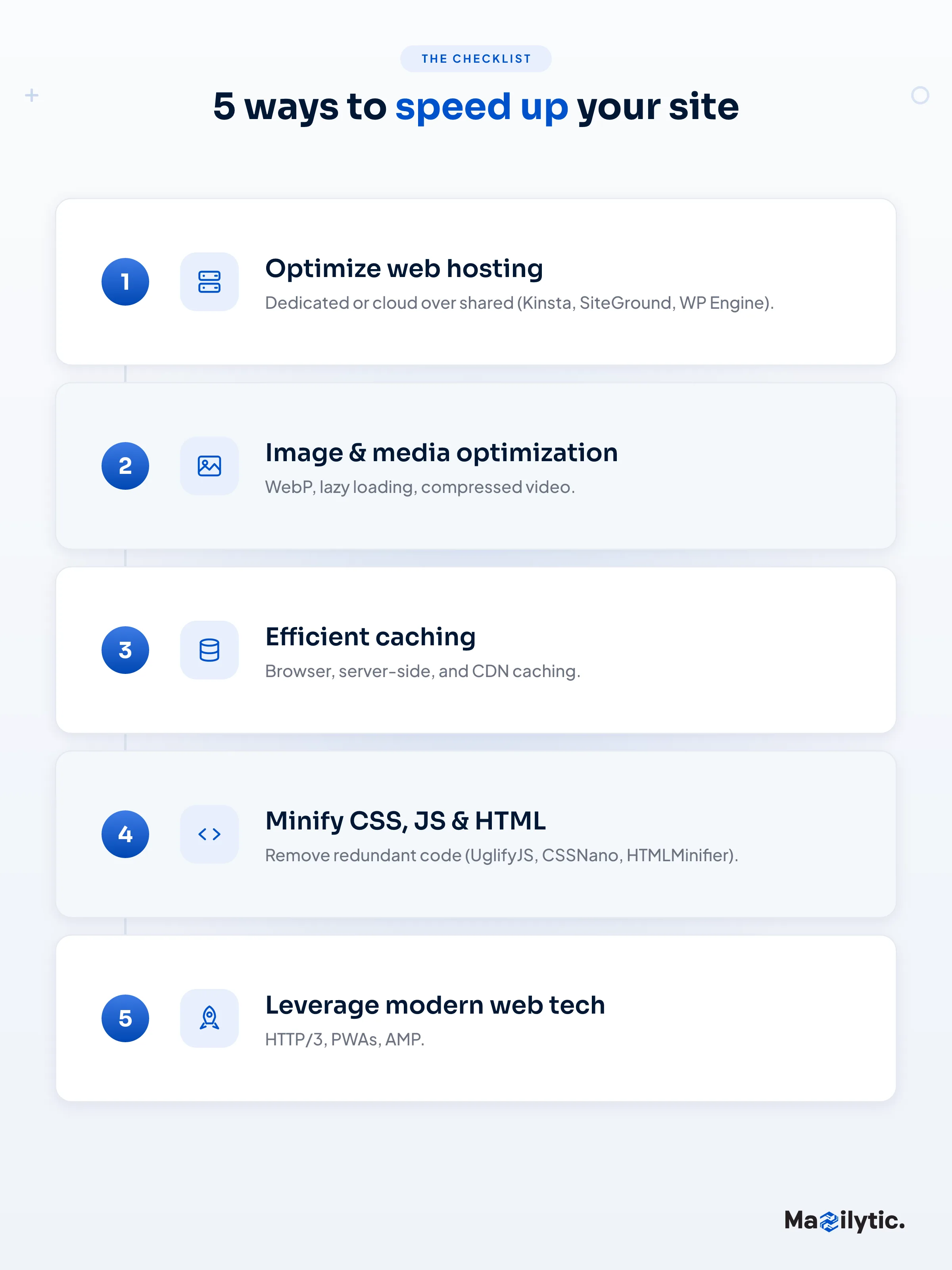
1. Optimize web hosting for speed and reliability: shared hosting quietly throttles otherwise well‑built sites. Dedicated or cloud hosting options consistently deliver higher uptime and faster load times. Kinsta, SiteGround, and WP Engine are commonly recommended providers, and most of the best web development companies default to one of these for client projects.
2. Image and media optimization: large media files are the most common cause of slow load speeds. Optimization should include next‑generation formats like WebP, lazy loading for off‑screen visuals, and compressed or externally hosted video.
3. Efficient use of caching: caching saves copies of files so repeat visitors load pages faster, reducing server workload. Three layers matter most: browser caching for returning visitors, server‑side caching to reduce processing load, and CDN caching to cut latency globally.
4. Minify CSS, JavaScript, and HTML: removing redundant code, whitespace, and comments genuinely speeds things up. Common tools include UglifyJS for JavaScript, CSSNano for CSS, and HTMLMinifier for HTML.
5. Leverage modern web technologies: HTTP/3 enables faster connections, Progressive Web Apps (PWAs) deliver app‑like experiences, and Accelerated Mobile Pages (AMP) support lightning‑fast mobile performance where it matters most. Any business looking to build a web app with real staying power should treat these as foundational, not optional add‑ons layered in later.
The Long‑Term Impact of Website Performance Optimization
Improved Search Visibility
Better performance consistently raises search rankings and discoverability, and regular speed maintenance helps insulate a site against ranking swings during algorithm updates.
Higher User Retention
Visitors return to sites that feel dependable and fast. Website performance optimization functions as a direct driver of brand trust, not just a technical checkbox.
Enhanced Accessibility and Inclusivity
Fast, well‑organized sites are easier for users with disabilities to navigate. Accessibility best practices improve SEO and expand audience reach simultaneously, rather than functioning as a separate workstream.
Choosing the Right Partner for Performance and SEO
Not every web development website or agency treats performance with the same rigor. When evaluating a web app development agency or an SEO optimization service, look for partners who can show measured before‑and‑after Core Web Vitals data. The strongest SEO service providers increasingly combine traditional technical audits with AI SEO optimization tools that flag performance regressions in real time, rather than waiting for a quarterly review to catch a problem that's already cost weeks of ranking gains.
Conclusion: Make Performance a Priority for Long‑Term Growth
Website performance optimization is essential to improving search rankings and click‑through rates. With the right approach to Core Web Vitals, page load speed, and UX, businesses can attract, engage, and retain visitors through media compression, effective caching, website speed optimization, and modern web technologies.
In a digital landscape where brand perception is shaped almost entirely by online experience, website performance optimization has become a competitive necessity, not a luxury. Continuous testing, adjustment, and optimization are what separate sites that grow from sites that quietly lose ground.
CTA: Ready to see where your site actually stands? A full Core Web Vitals and page speed audit can show exactly what's costing rankings and conversions. Get in touch with Mazilytic to find out.